


Fermented Yeast Protein vs Whey Protein: Benefits, Nutrition and Key Differences
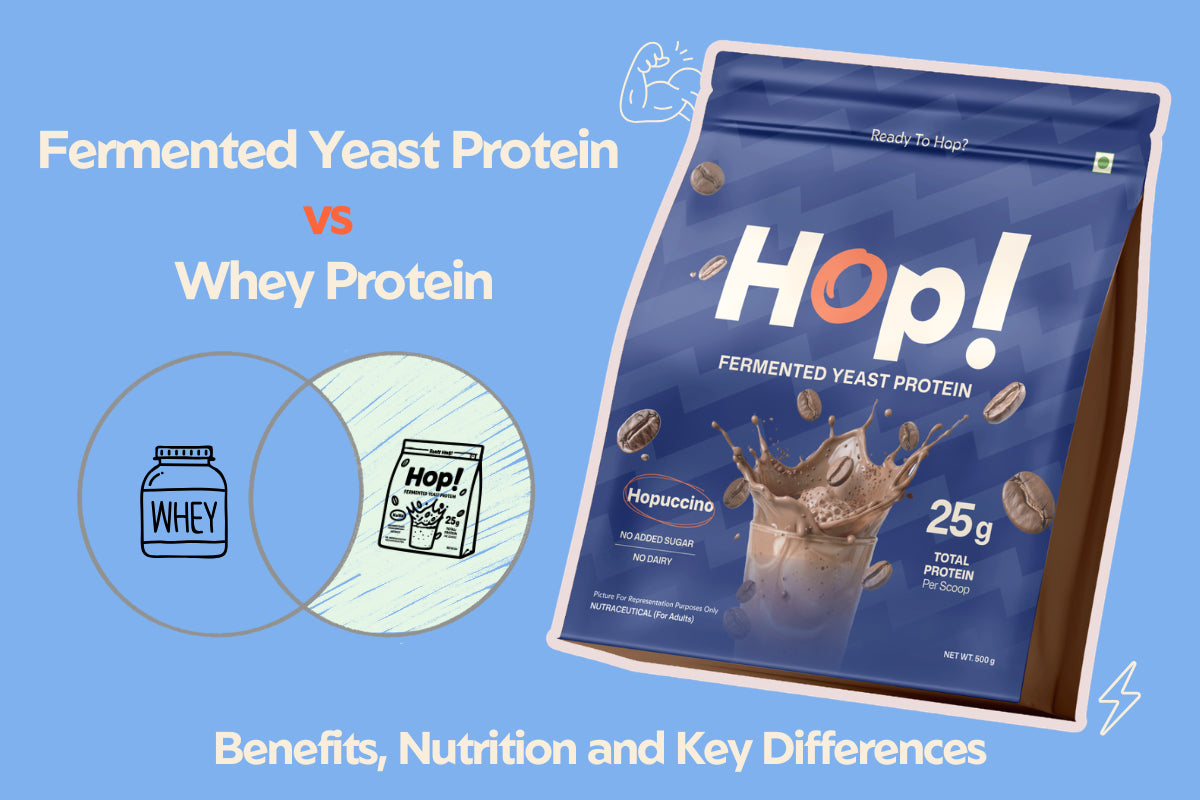
Table of contents
- Fermented Yeast Protein vs Whey Protein: Key Differences
- What Is Whey Protein?
- What Is Fermented Yeast Protein?
- Fermented Yeast Protein vs Whey Protein for Muscle Growth
- Which Protein Is Better for Digestion and Dietary Needs?
- Taste, Ingredients and Everyday Convenience
- How to Choose the Right Protein Powder
- Discover Fermented Yeast Protein with HOP
- Frequently Asked Questions
Fermented yeast protein vs whey protein comes down to protein source, dietary suitability, nutritional composition and personal preference. Whey is derived from milk, while fermented yeast protein is produced through microbial fermentation. Both can provide essential amino acids, but the best choice depends on your nutritional goals, product formulation and individual tolerance.
Choosing between fermented yeast protein and whey protein depends on what you need from your daily supplement. Whey offers an established option for muscle recovery, while fermented yeast protein provides a non-dairy alternative for people exploring different protein sources. HOP brings this alternative into everyday nutrition with flavour-led formulations that make meeting your protein goals more enjoyable.
Building strength is the goal? Our protein powder for muscle gain collection goes deeper into
Fermented Yeast Protein vs Whey Protein: Key Differences
The main difference lies in how these proteins are produced and the dietary needs they can accommodate. Whey comes from milk processing, whereas fermented yeast protein is produced using microorganisms under controlled fermentation conditions.
Here is how the two compare:
-
Source: Whey is dairy-derived; yeast protein comes from microbial fermentation.
-
Dietary suitability: Yeast protein can suit vegan and dairy-free diets, depending on the finished product. Whey is not vegan.
-
Protein quality: Both can provide essential amino acids. Their nutritional value depends on the specific ingredient and its amino acid profile.
-
Digestibility: Individual tolerance varies. Lactose content, other ingredients and personal sensitivities can influence digestion.
-
Everyday use: Both can help supplement dietary protein, depending on serving size and nutritional composition.
-
Environmental impact: Fermentation may offer production efficiencies, but a fair comparison requires evidence from comparable production systems.
Neither option is automatically better for everyone. The right choice depends on your nutritional requirements, food preferences, training routine and the product's actual composition.
What Is Whey Protein?
Whey protein is obtained from the liquid component separated during cheese production. It is filtered and processed into a concentrated powder used to supplement dietary protein.
Benefits of whey protein
-
Supports muscle development: Adequate protein supplies amino acids needed for muscle repair and growth alongside resistance training.
-
Provides essential amino acids: Whey generally contains all nine essential amino acids, including leucine, which plays an important role in muscle protein synthesis.
-
Offers convenience: Protein powder provides a practical way to increase protein intake when whole-food meals do not meet daily requirements.
-
Has an established research base: Whey is widely studied in sports nutrition, particularly for supporting muscle recovery and adaptation to exercise.
Are there any limitations?
Whey is unsuitable for vegan diets and may not be appropriate for people with milk protein allergies. Whey concentrate often contains more lactose than whey isolate, although the precise amount varies by formulation.
People with lactose intolerance may tolerate some whey isolates, but tolerance is individual. Anyone with a milk allergy should not assume that whey isolate is safe.
Want to compare brands before buying? Start with the best protein powder in India.
What Is Fermented Yeast Protein?
Fermented yeast protein is produced through controlled microbial fermentation. Depending on the production process, microorganisms are cultivated to generate protein-rich ingredients that are subsequently processed for food applications.
Unlike conventional dairy protein, yeast protein does not inherently come from milk. This makes it a potential alternative for people seeking non-dairy protein sources.
Key benefits of fermented yeast protein
-
Non-dairy protein source: It can be suitable for people avoiding dairy, provided the finished product meets their dietary requirements.
-
Essential amino acid potential: Some yeast protein ingredients provide all nine essential amino acids. The specific amino acid profile should be verified for the product.
-
Alternative production method: Fermentation offers another way to produce protein ingredients beyond conventional animal agriculture.
-
Flexible formulation: Fermented protein can be incorporated into powders and other food products, with taste and texture depending on processing and formulation.
However, fermented yeast protein is not automatically superior to whey in digestibility, muscle-building effectiveness or environmental impact. These comparisons require product-specific information and appropriate evidence.
HOP offers fermented yeast protein powders in flavours designed for everyday use, bringing an alternative protein source into a familiar supplement format.
Finding it hard to eat enough? See our protein powder for weight gain range.
Fermented Yeast Protein vs Whey Protein for Muscle Growth
Both proteins can contribute to muscle growth when they help you meet your daily protein needs. The key factors are your total protein intake, the quality of the protein, your training programme and adequate recovery.
Which protein supports muscle recovery?
Whey has substantial research supporting its use in sports nutrition. Fermented yeast protein can also contribute amino acids needed for muscle maintenance and recovery, provided its nutritional composition is appropriate.
When comparing products, consider:
-
Grams of protein per serving.
-
Essential amino acid content and leucine levels.
-
Total daily protein intake.
-
Calorie content and other ingredients.
-
Consistency with resistance training and recovery.
Do not judge a protein powder solely by its source or marketing claims. A product's actual nutritional profile matters more than whether it is presented as traditional or innovative.
Which Protein Is Better for Digestion and Dietary Needs?
Digestive tolerance differs from person to person. A protein that works well for one individual may not suit another.
Fermented yeast protein for lactose intolerance
Because yeast protein is non-dairy, it can be a useful option for people who need to avoid lactose. Check the complete ingredient list and allergen information rather than assuming every finished product is free from dairy cross-contact.
Does fermented yeast protein improve gut health?
Fermentation is a production process, not a guarantee of digestive benefits. A fermented yeast protein powder should not automatically be considered a probiotic supplement, and claims about improving the gut microbiome or reducing bloating require appropriate evidence.
Similarly, people with yeast sensitivities or relevant medical conditions should review the product ingredients and seek professional advice when necessary.
Looking for a pick that suits your needs? Browse protein powder for men.
Taste, Ingredients and Everyday Convenience
The best protein powder is one that meets your nutritional needs and fits comfortably into your routine. Taste, texture, mixability and ingredient preferences can influence how consistently you use it.
HOP offers several fermented yeast protein flavours:
-
Hopolate: A chocolate-inspired option for people who enjoy familiar cocoa flavours.
-
Hopuccino: A coffee-inspired choice for a different flavour profile.
-
Kulfi'd: A kulfi-inspired flavour that brings a familiar dessert influence to protein supplementation.
-
Strawberry Crème: A strawberry-inspired option for those who prefer fruity flavours.
Explore the individual product labels to compare protein per serving, calories, ingredients, allergens and preparation instructions. Flavour is important, but it should complement rather than replace nutritional considerations.
Sustainability may also influence your choice. Fermentation can have potential resource-efficiency advantages, but environmental performance depends on energy use, feedstocks, processing and manufacturing. Avoid assuming that every fermented protein product has a lower environmental footprint than whey without comparable evidence.
How to Choose the Right Protein Powder
Use these practical considerations when deciding between the two:
-
Define your goal. Muscle development, general nutrition and increasing daily protein intake may require different serving strategies.
-
Check the nutrition label. Compare protein per serving, calories, amino acids and other ingredients.
-
Consider dietary restrictions. Review dairy, lactose, yeast and other allergen information.
-
Assess product quality. Look for transparent ingredient information, credible testing and clearly stated serving instructions.
-
Choose a flavour you enjoy. Taste and convenience can make a supplement easier to incorporate into everyday life.
Ultimately, fermented yeast protein vs whey protein is not a universal contest with one winner. Both can have a place in a balanced diet, depending on their composition and your individual needs.
Women lifters can explore the best protein powder for women collection.
Discover Fermented Yeast Protein with HOP
Your daily protein routine should work for your goals without feeling repetitive. If you are exploring alternatives to conventional whey, HOP offers fermented yeast protein in flavour-led formulations designed to bring variety to everyday nutrition.
From chocolate-inspired Hopolate and coffee-inspired Hopuccino to Kulfi'd and Strawberry Crème, there are different flavours to explore while keeping your nutritional priorities in focus.
Ready to find your next favourite? Explore the HOP protein range, compare the product details and choose the flavour that fits your routine.
Frequently Asked Questions
Q1. How do you choose between fermented yeast protein and whey protein?
Compare protein content, essential amino acids, ingredients, dietary suitability and cost per serving. Choose the product that fits your nutritional goals and individual tolerance.
Q2. Can fermented yeast protein help build muscle?
Yes. It can contribute to the protein and amino acids needed for muscle maintenance and growth when combined with adequate overall nutrition and resistance training.
Q3. Is fermented yeast protein a complete protein?
Some yeast protein ingredients provide all nine essential amino acids. Check the specific product's nutritional information to confirm its amino acid profile.
Q4. Is fermented yeast protein suitable for people with lactose intolerance?
Yeast protein itself is non-dairy and can be an alternative for people avoiding lactose. Check the finished product's ingredients and allergen information.
Q5. Will fermented yeast protein improve digestion?
Not necessarily. Digestive responses vary, and fermentation alone does not guarantee better digestion or relief from bloating.
Q6. What is the main difference between fermented yeast protein and whey protein?
Whey is derived from milk, while fermented yeast protein is produced using microbial fermentation. Their amino acid profiles, digestibility, and suitability depend on the particular products.
Q7. What should you check before buying fermented yeast protein?
Check protein per serving, amino acid information, ingredients, allergens, testing transparency, and preparation instructions. Consider your nutritional goals before selecting a product.
Q8. Why choose fermented yeast protein over whey?
It may be preferable for people seeking a non-dairy or vegan protein option. Personal dietary needs, product composition, taste, and individual tolerance should guide the decision.
Keep reading


