


Why Is Yeast Protein So Cheap?
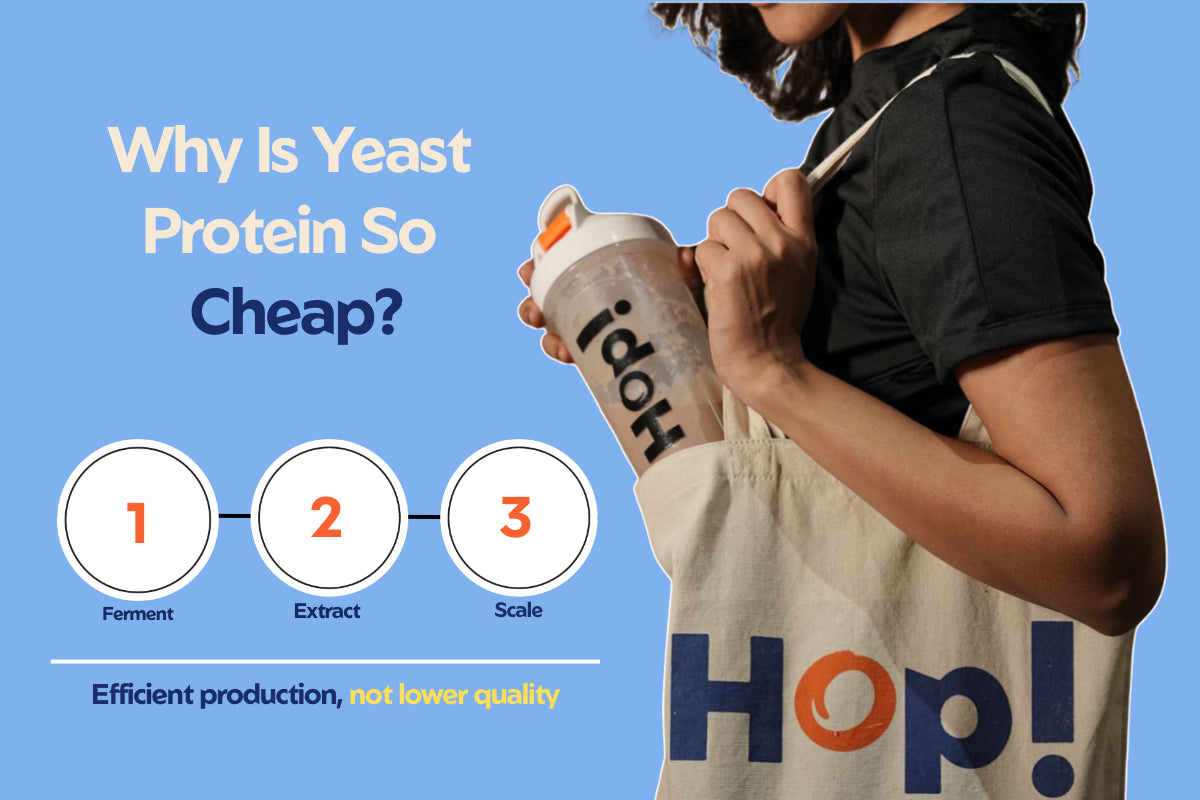
Table of contents
Yeast protein can be relatively affordable because it is produced through controlled fermentation, which supports scalable manufacturing without livestock or dairy production. HOP yeast protein powder uses this fermentation-based protein source and provides 25–26 g of complete protein per scoop, with all nine essential amino acids and 0 g added sugar.
Key Facts
-
Yeast protein is produced using microbial fermentation.
-
Yeast can grow using different carbon sources, including economical feedstocks.
-
Complete proteins contain all nine essential amino acids.
-
ICMR-NIN recommends approximately 0.83 g protein per kg body weight daily for healthy Indian adults.
-
HOP yeast protein powder provides 25–26 g protein per scoop, according to its official website.
Why Does Yeast Protein Cost Less to Produce?
Fermented Yeast protein can benefit from controlled fermentation and scalable manufacturing. Fermentation uses microorganisms such as yeast to convert suitable nutrients into protein-rich biomass under controlled conditions.
Unlike traditional animal protein production, fermentation does not require raising livestock or maintaining dairy herds. Manufacturers can manage temperature, oxygen, pH and nutrients to support consistent production.
Yeast can also utilise different carbon sources, potentially reducing raw material expenses. However, the actual savings depend on the feedstock, energy consumption, equipment and production scale. Discover Best Yeast Protein Powders In India to learn about popular options, key ingredients, nutritional profiles, and factors to consider when choosing a protein supplement.
Is Cheap Yeast Protein Lower in Quality?
No. A lower price does not automatically mean lower protein quality. Protein quality depends on its amino acid composition, digestibility, processing and overall nutritional profile.
A complete protein provides all nine essential amino acids, which the human body cannot produce independently. Therefore, consumers should compare nutritional information rather than judging protein supplements by price alone.
Consider these factors before purchasing:
- Protein per serving: Check the actual grams of protein, not just the scoop size.
- Amino acid profile: Look for information about all nine essential amino acids.
- Additional ingredients: Check added sugars, artificial flavours and sweeteners.
- Quality assurance: Look for credible laboratory testing and transparent labelling.
What Determines the Actual Price of Yeast Protein?
The cost of yeast protein varies between manufacturers because fermentation is only one part of production. Processing, drying, protein concentration, quality checks and packaging also contribute to the final price.
|
Cost factor |
Effect on product price |
|
Raw materials |
Feedstock quality affects production costs. |
|
Fermentation |
Equipment, energy and production scale influence expenses. |
|
Processing |
Separation, drying and purification add costs. |
|
Formulation |
Flavours, probiotics and other ingredients affect pricing. |
|
Testing |
Laboratory testing and quality assurance require investment. |
Therefore, inexpensive yeast protein is not necessarily poor quality. Equally, an expensive product is not automatically more nutritious. Compare the protein content, ingredients and manufacturing transparency before purchasing. Explore yeast protein vs whey protein to understand their differences in protein content, nutritional value, digestibility, and suitability for different fitness and dietary needs.
Why Should Indians Compare Protein Value Instead of Price?
Indian diets commonly include dal, roti, rice, milk and paneer. These foods contribute protein, but their protein content and amino acid profiles differ.
ICMR-NIN recommends approximately 0.83 g protein per kilogram of body weight daily for healthy adults. For a 60 kg adult, this equals approximately 50 g daily.
A protein supplement can help complement everyday meals when dietary intake is insufficient. However, whole foods should remain part of a balanced diet.
Medical note: Consult a qualified healthcare professional before changing protein intake if you have an existing medical condition.
Is HOP Yeast Protein Powder an Affordable Protein Option?
HOP yeast protein powder uses fermented yeast as its protein source and provides 25–26 g of complete protein per scoop, containing all nine essential amino acids. Its formulation includes 10 billion CFU probiotics, 0 g added sugar, and no artificial sweeteners, colours, or flavours. It is also dairy-free, and the brand states that its products are lab-tested.
Frequently Asked Questions
Q1. Is yeast protein cheaper than whey protein?
Yeast protein can have different production economics because it uses fermentation rather than dairy processing. However, actual prices vary by brand, serving size, formulation and manufacturing costs.
Q2. Why is fermented yeast protein becoming popular?
Fermented yeast protein offers a non-dairy protein source with a complete amino acid profile. Its controlled production process also makes it an interesting alternative for manufacturers developing plant-based nutrition products.
Q3. Is cheap yeast protein safe to consume?
Price alone cannot establish safety. Check ingredient lists, allergen information, manufacturing standards, laboratory testing and recommended serving sizes before choosing any protein supplement.
Q4. Does yeast protein contain all nine essential amino acids?
Some yeast protein products provide all nine essential amino acids, making them complete proteins. Always check the specific product's nutritional information and amino acid profile.
Q5. Is yeast protein suitable for lactose-intolerant people?
Yeast protein is naturally different from dairy-derived whey. Dairy-free yeast protein products can suit people avoiding lactose, provided their complete ingredient and allergen information meets individual requirements.
Keep reading


